Common Ground / A visual essay
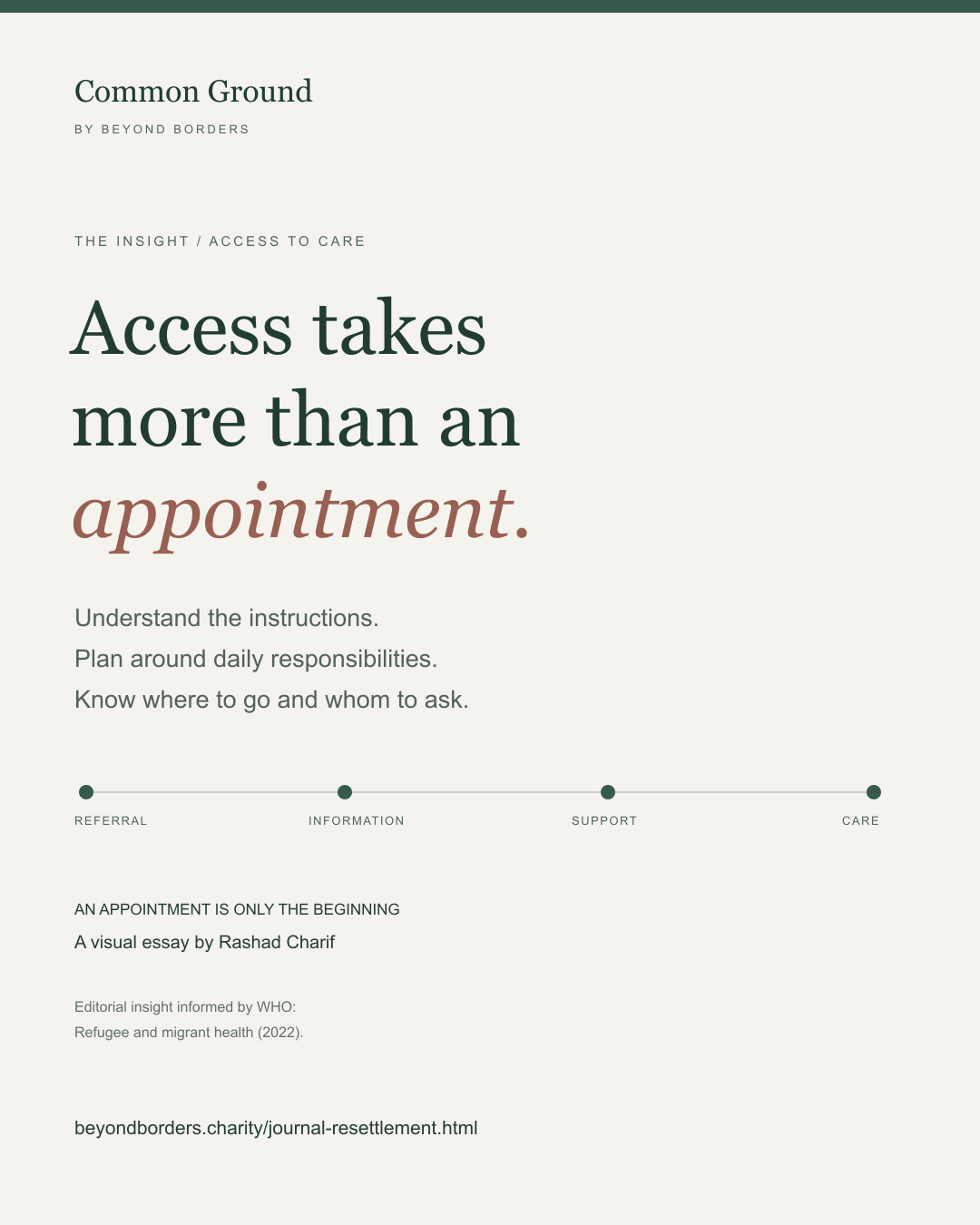
An appointment is
only the beginning.
The practical steps between receiving a referral and reaching care.
Follow the journeyTuesday
10:00AM
The first step toward care.
Explore what it can take to reach care.
Illustrative scenario, not a patient story or measured outcome.
01 / The appointment
Care begins before the visit.
An appointment provides a time and place for care. Reaching it may still require clear information, practical arrangements, and support navigating an unfamiliar healthcare system.
02 / Understand the next step
What does this referral mean?
Understanding a referral means knowing where to go and what to do next. Unfamiliar terminology and language barriers can make those instructions difficult to follow. The World Health Organization recommends interpreting, translated resources, and practical assistance navigating care. [1]
03 / Make room for care
How does care fit into daily life?
Attending a visit may involve taking time away from work, arranging childcare, or coordinating other caregiving responsibilities. A conversation about scheduling can help clarify which commitments need to be considered.
04 / Reach the appointment
How do I get there?
Knowing the clinic’s address is one part of the journey. Planning transportation, finding the correct entrance, and allowing enough travel time are practical details that may need attention before the visit.
05 / Connect the steps
Make the next step clearer.
Support could include understandable instructions, a discussion of timing and transportation, and a reliable contact for questions. The final view illustrates how these elements could accompany a referral.
Explore how practical support could accompany the referral.
A perspective from refugee protection
“learning a new language, getting to know their neighbors, finding work were serious challenges”
Reflecting on conversations with refugees resettled in the United States and Canada, Grandi described the everyday challenges of establishing a life in a new community. Accessing healthcare takes place within that wider context.
The takeaway
Accessible care begins with understanding.
WHO describes language, administrative, and financial barriers to healthcare, and recommends practical support with registration, appointments, and attendance. [1] For organizations connecting people with care, a referral should prompt a further question: what information or assistance does this person need to take the next step?
Conversations with refugee community members help organizations understand what makes care difficult to reach and which support people find useful. Listening throughout the process helps keep services responsive to the priorities people identify.
Evidence, interpretation & visual method
The WHO source below informs the discussion of healthcare navigation and language access. The appointment and practical arrangements are illustrative, not a real patient’s experience. They do not represent every refugee’s circumstances. The support view presents suggestions for service design; their effectiveness has not been evaluated in this essay. The Grandi excerpt comes from a public statement and does not imply an endorsement of Beyond Borders. This visual essay is not independently peer reviewed.
Source
World Health Organization. Refugee and migrant health.
Questions and answers, April 11, 2022. See “How should health care be organized for refugees and migrants?” and “What barriers do refugees and migrants face?”
Your perspective
What did this bring to mind?
Share a question, an experience, or a different perspective.
Write to us